.png)
ARTICLE AD BOX
After 9pm on Sunday, 14 December 2025, Judge Rigoberto Sena of the National District Permanent Attention Court returned to the courthouse after deliberation and ordered the maximum 18-month pre-trial imprisonment at Najayo Jail following the indictment presented by the Attorney General towards the former director of the National Health Insurance plan (Senasa) plan, orthopedian Santiago Hazim Albainy and six others – Rafael Luis Martinez Hazim, Gustavo Enrique Messina Cruz, German Rafael Robles Quiñones, Francisco Ivan Minaya Perez, Ramon Alan Speakler Mateo and Ada Ledesma Ubiera. Ubiera was ordered to the Najayo women’s jail. The judge also declared the case complex that gives more time for the hearings.
In line with a request from the Public Ministry, Judge Sena also imposed less severe measures—including house arrest, travel bans, and periodic reporting—on Eduardo Read Estrella, Cinty Acosta Sención, and Heidi Mariela Pineda Perdomo. Those allowed house arrest have been collaborating with the investigation.
Prosecutors from the Public Ministry’s General Prosecution and the Specialized Anti-Corruption Prosecution Department (PEPCA) had initially requested pre-trial detention for seven of the ten individuals charged in the widely reported case. In his remarks on the judge’s decision, Wilson
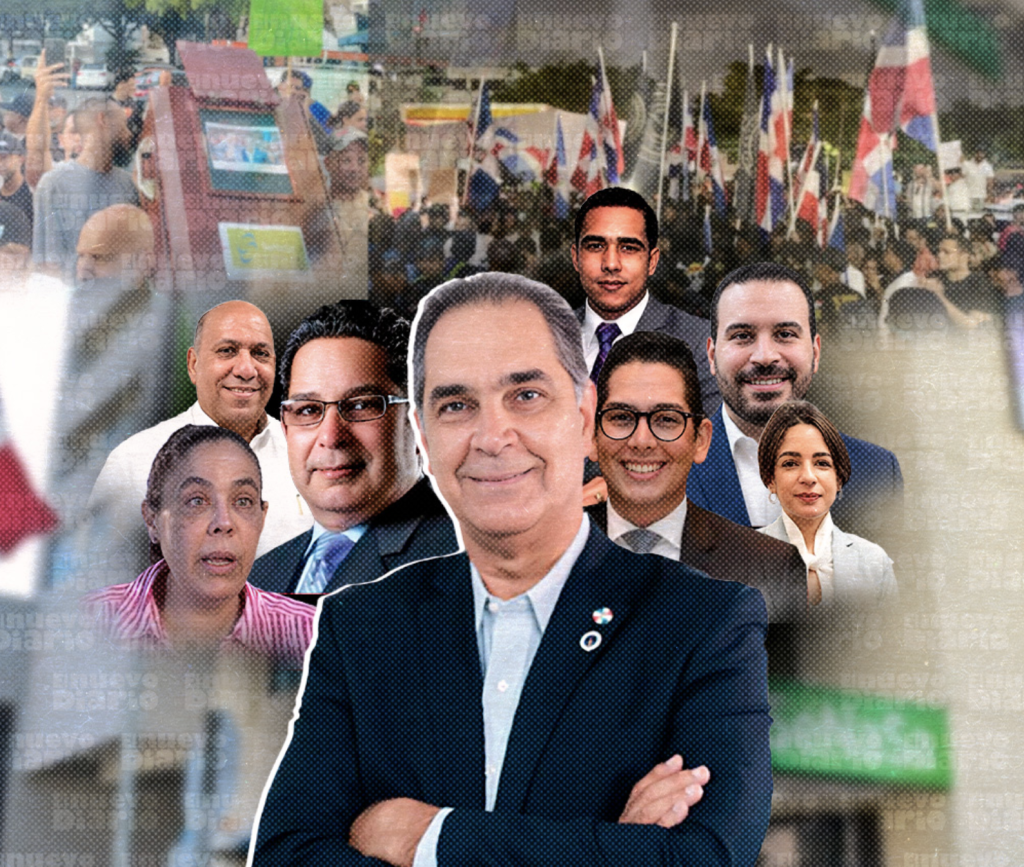
The prosecution team, comprising fiscal officers Wilson Camacho, Mirna Ortiz, Rosa García, Enmanuel Ramírez, Héctor García, Yudelka Holguín, Aurelio Valdez, Alexis Piña, and Ernesto Guzmán. Camacho confirmed that there would be a Senasa 2.0, as first remarked by Attorney General Yeni Berenice Reynoso. Senasa 2.0 would feature charges against medics and other medical suppliers that acted as accomplices in the health insurance irregularities.
In late developments on the Senasa case (named Cobra by the prosecution), President Luis Abinader named highly reputed social security expert Arismendi Diaz Santana to head the technical committee to instate controls in Senasa, the country’s largest health insurance company. Senasa is the talk of the town after the uncovering of billions in fraudulent operations. Diaz Santana is known as the man who presided the technical team that designed the country’s social security system and the first general manager of the National Council for Social Security (CNSS).
Senasa is the country’s largest health insurance company primarily serving the public sector, the poor, those who are independently employed. The situation imploded when mid-year President Luis Abinader named his trouble-shooting man Miguel Ceara Hatton to the Superintendency of Health and Occupational Risks (Sisalril) in August 2025, an appointment that marked the end of the term of Dr. Santiago Hazim as the head of Senasa since August 2020. Previously, Ceara Hatton had been sent to the Ministry of Environment after the incumbent was murdered on the job.
Over the weekend, leading journalists and talk shows have continued to share insights into the Senasa fraud case, now being compared to Baninter in its scope of corruption and widespread impact on the country.
What is different in this case, though, is that the health of a population, and in particular of the poor, was at play. Wilson Camacho, chief prosecutor for the Attorney General Office, has called “sinister” the actions of the scamsters given that Senasa primarily serves the poor.
The main defendant in the case is Santiago Marcelo Hazim Albainy, an orthopedist who was a significant political fundraiser for President Luis Abinader in 2020 elections and 2024 re-election bids. Also charged is businessman Eduardo Read of Grupo Read, whose companies were reportedly the main beneficiaries of numerous new contracting schemes. Read companies had been contracting with Senasa, but the contracts were expanded and new ones added during the administration of Dr. Santiago Hazim. The prosecutors sought 18 months of preventive custody for those charged as the case is heard in court.
The indictment alleges that Dr. Hazim created a special committee to deliberately and discretionarily favor healthcare providers linked to his political and social circles, as well as companies associated with his personal, political, and economic interests.
The 500-page prosecution file points to how the operational structure at Senasa was replaced by this committee was a mechanism to improperly award contracts and payments. The initial prosecutor’s file suggests a fraud of RD$15 billion, though media reports speculate the total loss could reach RD$200 billion.
The group now faces serious charges, including: collusion of public officials, malfeasance and prevarication, criminal association, bribery, embezzlement, falsification and use of false documents, money laundering and fraud against the Dominican government.
In addition to Hazim and Read, the names of others arrested are Gustavo Enrique Messina Cruz, Germán Rafael Robles Quiñones, Francisco Iván Minaya Pérez, Cinty Acosta Sención, Ramón Alan Speakler Mateo and Ada Ledesma Ubiera.
Recent reports by journalist Edith Febles and physician Humberto Salazar detail the chronology of events that appear to clear President Luis Abinader of direct involvement or prior knowledge of the fraud. Actions taken recently by the President seem to reveal he, too was surprised by the scope of the fraud. The key action was the naming of highly reputed economist Miguel Ceara Hatton to the Superintendency of Health and Occupational Risks (Sisalril) in August 2025.
For months before the naming of Ceara Hatton, the financial difficulties of Senasa were the talk of the town among internal medical circles. Ceara Hatton replaced pediatrician Jesus Feris Iglesias at the Superintendency of Health and Occupational Risks (Sisalril) in August 2025. Feris Iglesias is not charged in the prosecution file.
Sisalril is the regulatory body responsible for preventing fraudulent operations at Senasa, but it failed to act when its own technicians first alerted officials to abnormalities, even though the fraudulent schemes began in 2020. Sisalril did not acknowledge the impact until 2023.
Then Nuria Piera was leaked, probably by opposing business interests, and aired a first investigative report. The government meanwhile had been injecting extra funds into Senasa and President Luis Abinader himself defended the situation pointing to the more than two million Dominicans who were added to the health insurance corporation in a social scheme reportedly to benefit the poor.
Journalist Edith Febles has highlighted significant institutional vulnerabilities that allowed the schemes to flourish, including the fact that Senasa did not make its financials publicly available and its institutional autonomy kept it outside the direct control of the Controller Agency. Its autonomy also released it from its contracting falling outside of the real of the Procurement Agency.
These major loopholes created fertile ground for the scams later revealed by the Attorney General’s Office (AGO).
After his appointment, Ceara Hatton’s requests for information from Senasa continued to be resisted. But Ceara Hatton persisted and subsequently installed “swat-style technocrats” inside Senasa who successfully recorded data and videos showing incriminating information being erased from the institution’s systems. Confronted with this evidence, Dr. Hazim maintained his innocence, but the report with the evidence about his trusted political aide was sent to the President.
President Abinader eventually removed Dr. Hazim in September 2025, replacing him with Edward Guzmán, the former government representative to the National Social Security Council (Consejo Nacional de la Seguridad Social).
Edith Febles explains the impact of the privatization actions at Senasa and its impact on the public hospitals. As the Senasa was bled with a myriad of schemes, the government resorted to repeatedly injecting fresh funds into Senasa for months to prevent its bankruptcy.
Edith Febles disclosed that the investigations reveal that a major transparency program contracted with the United Nation Development Program and won by a Dominican company was aborted when it was 85% installed. The instatement of the transparency program would have avoided the present day situation.
In her coverage of the case, Febles explains that the allocation for healthcare of Senasa funds went from 70% public sector and 30% private sector to 30% public sector and 70% private sector. The shift benefited private contractors, reportedly mainly those affiliated to the Grupo Read, and allegedly caused the financial distress of the public hospital system, which serves the poor. Eduardo Read of the Grupo Read, the man who signed the contested contracts for the Grupo Read, is said to be negotiating a deal with the prosecution.
Another key informant is As is common in major corruption cases, the government is reportedly relying on Gustavo Guilamo, Dr. Hazim’s former trusted head of cabinet at Senasa, who has now become the main informant for the investigation. The implosion of Senasa could potentially lead to a comprehensive overhaul of the national medical system.
The Attorney General, Yeni Berenice Reynoso, stated last week that the preliminary investigation has implicated 10 individuals, but promised a “Senasa 2.0,” indicating more follow-up and investigations into other players in the medical system. The continuing investigations could reveal a widespread complicity of hospitals and medical professionals that were lured into the lucrative Senasa get rich schemes. What is already known is that private clinics and medics that accepted to work with Senasa were allegedly obliged to pay bribes to benefit from the schemes.
The Dominican Medical Association was likely to have known of the situation, but its very vocal Waldo Ariel Suero did not alert the country of what was happening. Now, several medics may be involved.
The defense of Dr. Santiago Hazim had requested home arrest and permission to leave for the United States to continue his medical treatment for multiple sclerosis.
Read more:
El Dia
Noticias SIN
Presidency
Diario Libre
El Caribe
El Caribe
Listin Diario
Listin Diario
Listin Diario
Listin Diario
Nuria Piera Investiga Operacion Cobra
Nuria Piera Investiga Senasa Part 2
Nuria Piera Investiga Senasa Part 1
N Digital
N Digital
Edith Febles – Yeni Berenice Reynoso and Senasa 2.0
Jose Peguero
Jose Peguero
Al Tanto TV Interview Humberto Salazar
Jose Maracallo Interview Humberto Salazar
Esta Misma Semana
El Nacional
Hoy
Resumen de Salud
Z101 Digital
DR1 News
DR1 News
DR1 News
DR1 News
DR1 News
DR1 News
DGCP
15 December 2025



 English (US) ·
  Spanish ·